Azulejo Tattoo in Porto: Portuguese Tile Art on Your Skin
Porto is covered in tiles. They’re on the church facades, the train station walls, the staircases, the narrow streets of the old city. They’re so omnipresent that you stop noticing them — until you really look for the first time. The azulejo tattoo — or Portuguese tile tattoo, as it’s often searched in English — has become one of the most requested designs in Porto’s studios: sought by Portuguese people wanting to honour their heritage, and by visitors who left the city but couldn’t quite leave it behind. Five centuries of Portuguese ceramic art, finding a new surface.
Azulejos and Portuguese Identity — A Five-Century Heritage
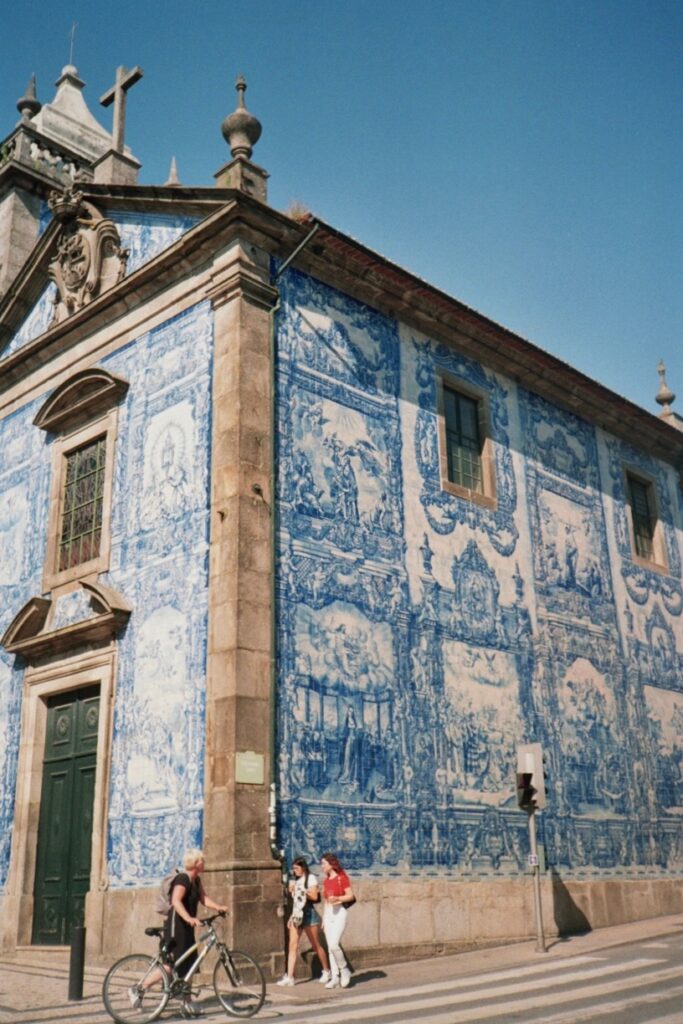
The word comes from Arabic — al-zulayj, meaning small polished stone. The Moors brought the tradition, but Portugal made it its own. In the 16th century, King Manuel I returned from Seville enchanted by the tiles of the Alcázar and ordered the Sintra Palace to be covered in them. Over the following two centuries, azulejos spread across churches, palaces and public squares throughout the country.
By the 17th and 18th centuries, tiles had become more than decoration — they were narrative. Entire panels told stories of battles, saints, and rural life; for those who couldn’t read, they were the books on the wall. In Porto, that legacy is still visceral. São Bento Station holds panels depicting scenes from Portuguese history with extraordinary detail. The Igreja do Carmo has one of the most photographed azulejo facades in the city. The Sé Cathedral and the Chapel of Souls complete a blue-and-white itinerary that makes Porto feel like an open-air museum.
It’s from this specific tradition — documented, dated, geographically rooted — that the azulejo tattoo draws its weight.
Why the Portuguese Tile Tattoo Has Become One of the Most Sought-After in Portugal
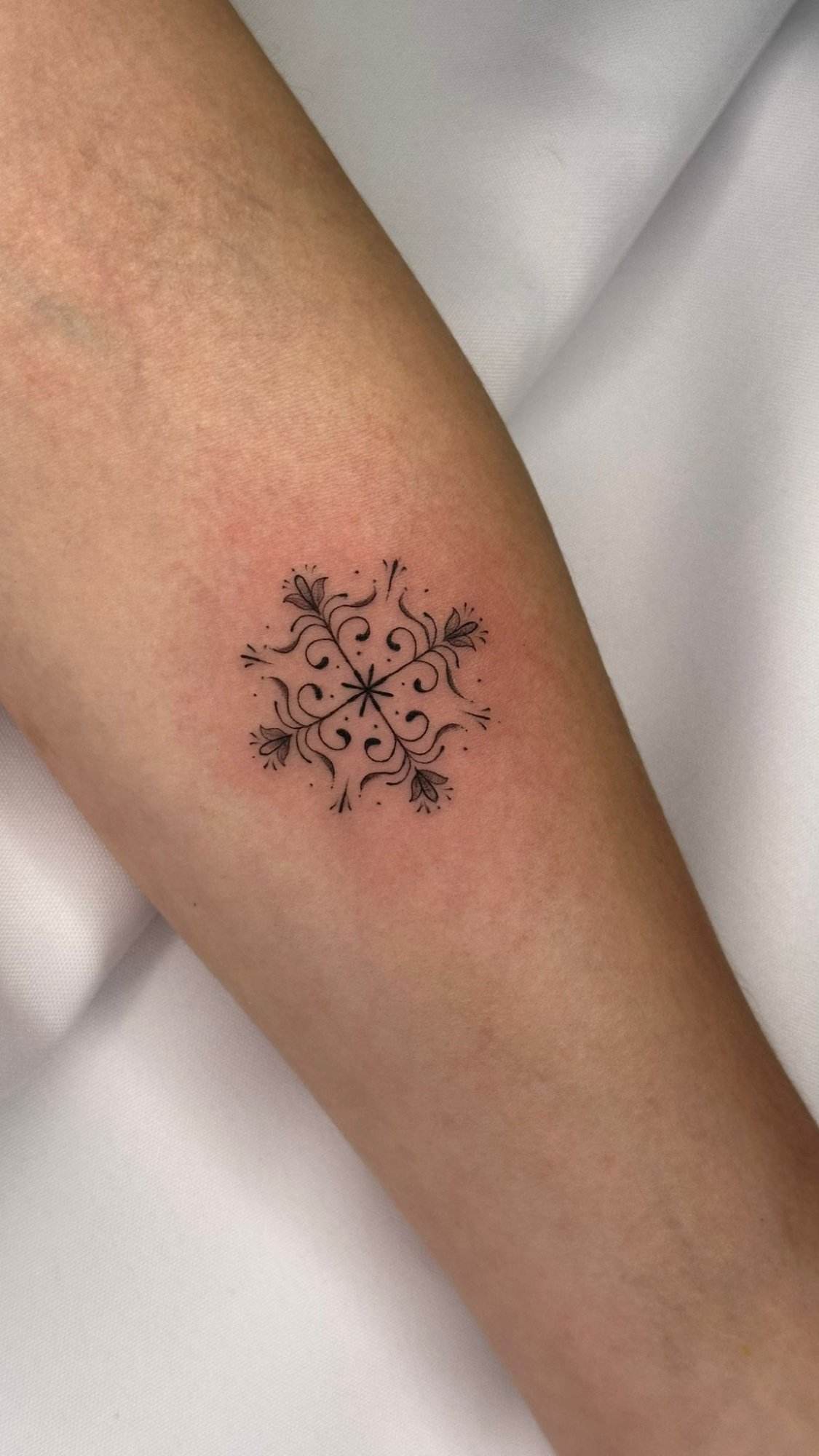
Demand for azulejo tattoos has grown steadily over the past few years, both in Portugal and internationally. The reasons split into two distinct categories.
For those born here, getting an azulejo tattoo is a way of honouring roots that no object can replicate. It’s not a fridge magnet. It’s permanent, intimate, and intentional. For visitors experiencing Portugal for the first time and falling in love with it, it’s the souvenir that doesn’t fit in a suitcase — so it goes on the skin instead. Porto has become a reference destination for people who want exactly this: to walk through São Bento Station, be stopped in their tracks, and go home with something they’ll never lose.
There’s also an undeniable aesthetic dimension. Azulejo has a geometry that seduces — precise lines, elegant symmetries, hypnotic repetition. Translated into fine line tattooing, that visual language works beautifully — perhaps because it was always made to last.
Azulejo Fine Line Tattoo: Technique, Line Work, and What Sets It Apart
Not every Portugal-inspired tattoo is an azulejo tattoo. And not every azulejo tattoo is fine line. The distinction matters.
Fine line is a technique that uses minimal-width needles to create hair-thin, delicate lines — almost as if drawn in ink on paper. It’s the right technique to replicate what makes azulejo unique: geometric precision, the minute detail of floral motifs, the lightness of a blue outline on white. A heavy blackwork piece would say too much. A thick line would lose the essence of the original.
Azulejo fine line tattooing is therefore one of the most technically demanding styles. It requires a steady hand, an eye trained for proportions, and a genuine understanding of the heritage being translated. It’s not a style every tattoo artist can execute well — which is exactly why choosing the right artist makes all the difference.
One practical point worth noting: fine line requires rigorous aftercare. Very thin lines are more sensitive to sun exposure and the healing process than heavier linework. A good tattoo artist will explain this before the session — and a well-informed client ends up with a tattoo that holds its sharpness far longer.
Most Popular Motifs and Inspirations — From Geometric to Floral
The richness of Portuguese azulejo lies largely in its variety, and that variety is reflected in the tattoos.
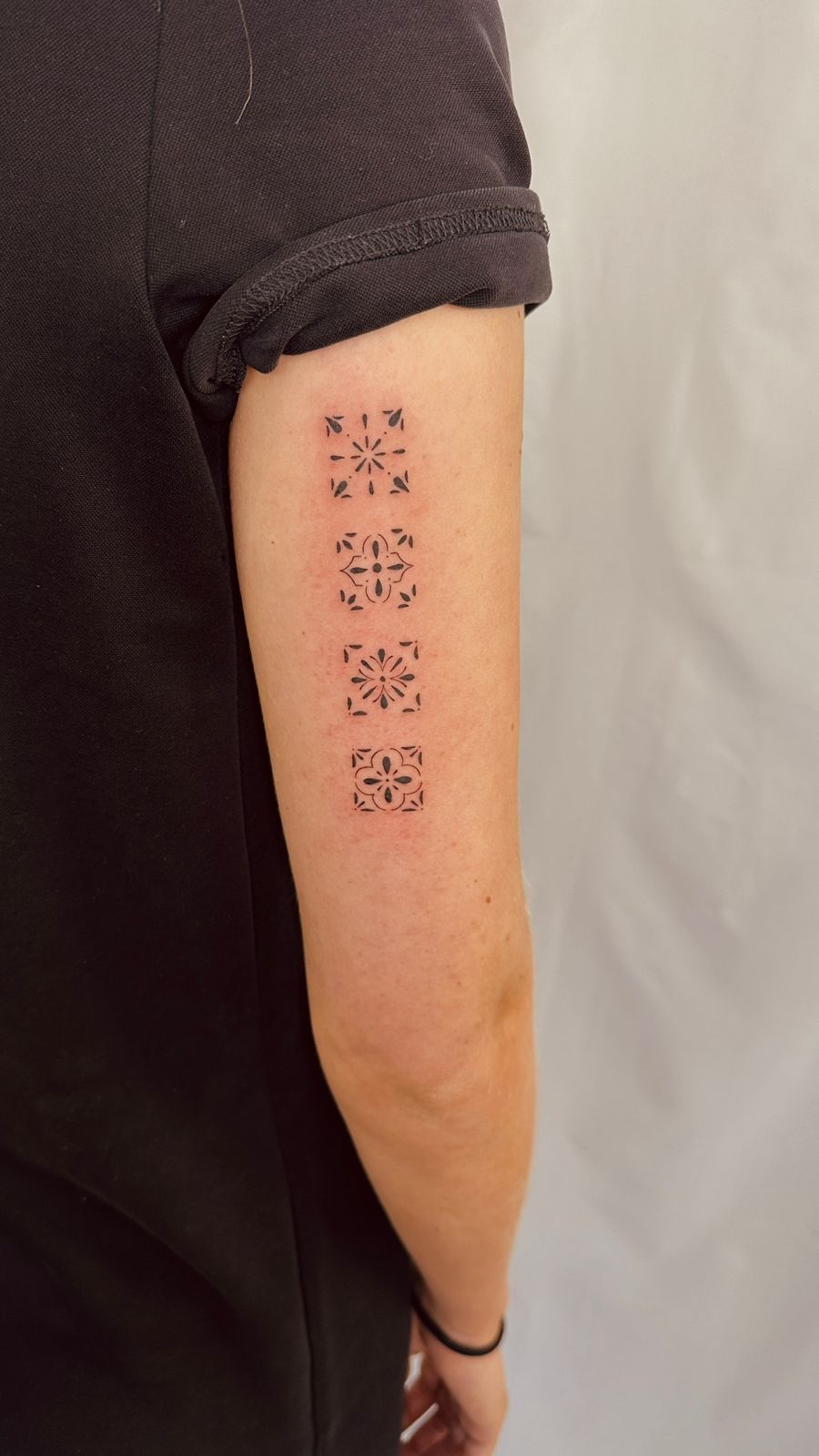
Classic blue and white is, unsurprisingly, the starting point for many. There’s something timeless in that palette — restrained, elegant, immediately recognisable. Within this tradition, geometric motifs are the most requested: eight-pointed stars, interlocking diamonds, patterns that repeat with an almost mathematical logic.
Floral designs are another strong category. Roses, carnations, acanthus leaves — elements drawn from historic tile patterns that, in fine line, acquire an almost otherworldly delicacy. Others draw inspiration directly from the great narrative panels: a scene from São Bento Station condensed onto a forearm, or a fragment of the Igreja do Carmo facade carried on a shoulder. These are tattoos that tell stories within stories.
More recently, a fusion trend has emerged — azulejo combined with botanical elements, with Porto’s architecture, with minimalist interpretations that keep only the geometric essence of the original. These are also the compositions that age best. Geometry doesn’t date.
Why Porto Is the Ideal Place to Get This Tattoo
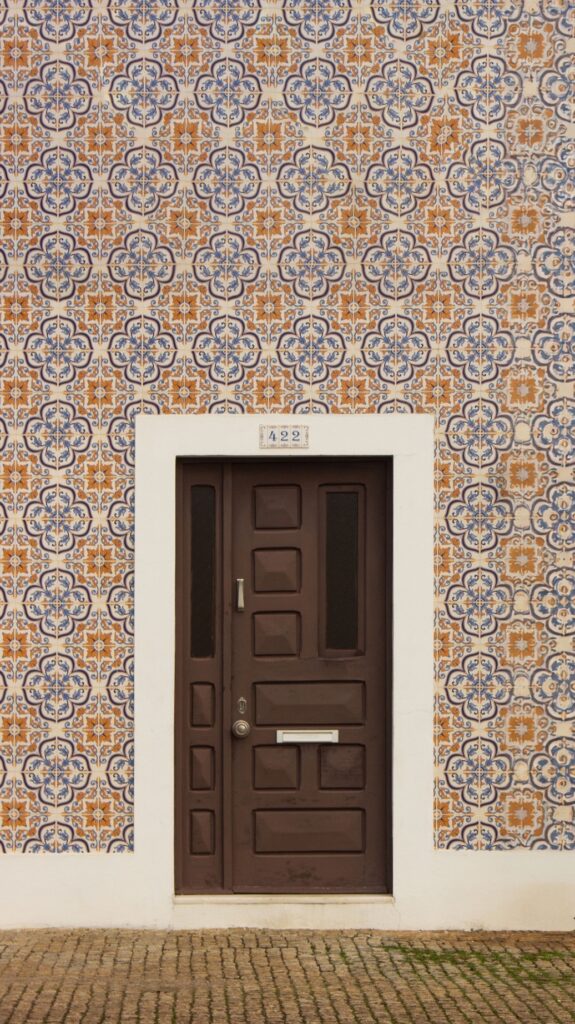
There’s a concrete difference between getting an azulejo tattoo in Porto and getting one anywhere else: in Porto, the original is ten minutes away on foot. The city lives surrounded by this visual vocabulary — on facades, in churches, in train stations. The design doesn’t come from a Pinterest search; it comes from the street. That changes the relationship a person has with the tattoo, before and after it’s done.
Porto also has a strong, exacting tattoo culture. Studios here don’t cater to passing tourists — they work for people who have researched, chosen a specific artist, and sometimes travel deliberately just to get a piece done. That context raises the bar and attracts artists with a far more specialised profile.
Among the most recognised names in Porto for azulejo and ornamental fine line is Gi Bianco — a tattoo artist based in Porto since 2022, with a career that began in 2018 and a focus on fine line from day one. Her work in azulejo and ornamental tattooing has made her one of the most sought-after artists in the city and in Portugal, known for her precise line work and the sensitivity with which she translates historic motifs into contemporary compositions.
How to Choose Your Azulejo Design — and What to Ask Your Artist
For many people, this is the hardest part. It’s also the most important.
Before any session, it’s worth gathering visual references — photographs of tiles that caught your eye, patterns that keep coming back to you, details from facades you photographed on a rainy afternoon in Porto. The more specific the starting point, the richer the result. You don’t need to arrive with a finished design — you need to arrive with at least one concrete image: a pattern, a facade, a photograph you took on some random afternoon.
Scale and placement on the body are decisions the artist helps shape, but they should come from you. A complex geometric panel needs space — a forearm, a thigh, a shoulder. A simpler floral motif can work perfectly on a wrist or behind an ear. The conversation with the artist is part of the process, not just an administrative step.
Gi Bianco is known precisely for taking that conversation seriously. Every tattoo she creates is unique — she never repeats a design, never works from saved templates. The process always starts with the person: the story they want to tell, the body that will carry the tattoo. That approach has made her one of the most recognised artists in Portugal for azulejo and ornamental fine line — not just for the technique, but for the way she turns an idea into something exclusive and unrepeatable.
Frequently Asked Questions About Azulejo Tattoos in Porto
How long does an azulejo tattoo session take? It depends on the complexity and size of the design. A small to medium piece can be completed in a session of two to three hours. Larger panels or designs with heavy geometric detail may require longer sessions or multiple visits.
Is azulejo fine line tattooing suitable for sensitive skin? Fine line uses thinner needles and is generally considered less aggressive than heavier techniques. That said, every skin is different, and a consultation with the artist is always the best starting point.
Can I customise the design, or does it have to be a traditional azulejo? Absolutely. Some of the most interesting azulejo tattoos are precisely those that start from tradition and arrive somewhere new — fusions with botanical elements, adaptations of historic patterns into contemporary compositions, or personal interpretations of tiles the client photographed on their travels.
How much does an azulejo tattoo cost in Porto? Prices vary depending on the artist, the size, and the complexity of the design. Artists who specialise in fine line and have high demand generally have waiting lists — and prices that reflect the exclusivity of the work.
Azulejo Tattoo in Porto: Where to Begin
A Portuguese tile tattoo made in Porto has a simple advantage: it was designed here, where the original azulejo is. It’s not a decorative motif lifted from a stock image — it’s five centuries of Portuguese tradition translated onto skin by someone who knows the city and what makes it singular.
If you want to create your own exclusive design, the first step is a consultation. Get in touch with Gi Bianco via Instagram — every tattoo starts with a conversation, never with a template.
As an artist, I recognise the dedication and time each design requires. We always try to identify the authors of images in this post that are not by Gi Bianco — but we don’t always succeed. If you are the author or know who created any of the images, please contact us so we can give proper credit.
Tell me your
idea.
Schedule in December
@gibianco.tattoo