Fine line tattoo in Portugal: how Porto became a European destination
Fine line tattoo in Portugal has taken off in recent years, and Porto leads the way. The style, done with a single needle and very thin lines, turns into delicate pieces: florals, ornamental work, minimalist designs. The city pulled three things together at once: a generation of artists who built their craft around thin-line work, a growing stream of visitors who want to take a memory home on their skin, and a local culture (the azulejo tiles, the ornament, the Portuguese decorative tradition) that sits naturally with anything delicate. What came out of it is a small, demanding scene that keeps getting noticed abroad.
I’m Gi Bianco. I’ve been tattooing since 2018 and I moved from São Paulo to Porto in 2022. I’m part of that generation, and I watch this play out from inside the studio every week: clients who cross half the world to get a fine line tattoo here. In this article I’ll explain where the style comes from, why Porto turned into a destination, and what sets apart the fine line work being made in Portugal.
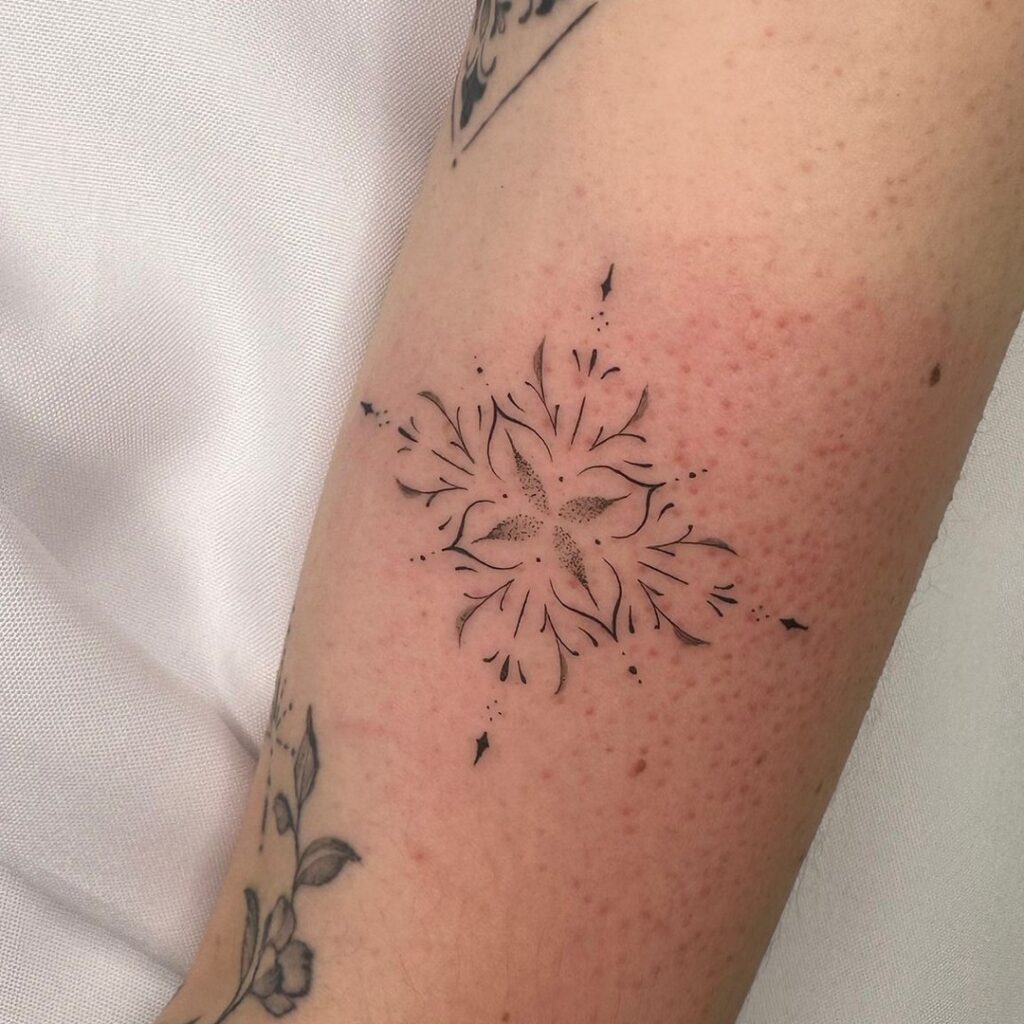
What fine line is, and where it comes from
Fine line is American in origin, not Portuguese. The style grew out of the single needle work that appeared in 1950s Los Angeles, inside the prison system, where artists like Charlie Cartwright dropped the usual cluster of needles down to one to pull lines thin enough to draw by hand (history of fine line). Decades later, in the 2010s, it was the tattooer Dr. Woo who carried the style to a wide audience: he kept the single-needle discipline but swapped the old motifs for delicate botanicals, geometry and minimalist illustration, and Instagram did the rest (Dr. Woo).
The thing that defines the style is technical. Thin needles (usually a 1RL, a single round liner), lines around 0.25–0.30 mm laid into the skin, no heavy shading (style guide). It asks for a steady hand and patience, because with lines that fine there’s nowhere to hide a slip. If you want the style broken down properly, I wrote a separate guide on what a fine line tattoo is and who it suits.
So the roots are American. What happened in Portugal was something else: this style being taken in, settled and matured in one particular city, with a character of its own.
Porto, the heart of fine line tattoo in Portugal
If there’s one city where fine line found a home in Portugal, it’s Porto. I started tattooing in 2018, still in Brazil, back when the style already owned Instagram. When I moved to Porto in 2022, I found a city filling up with studios devoted to thin-line work, plenty of them opened by Brazilian artists like me. That’s no accident: fine line pulled in a whole generation of tattooers, and a good part of it ended up in cities like Porto.
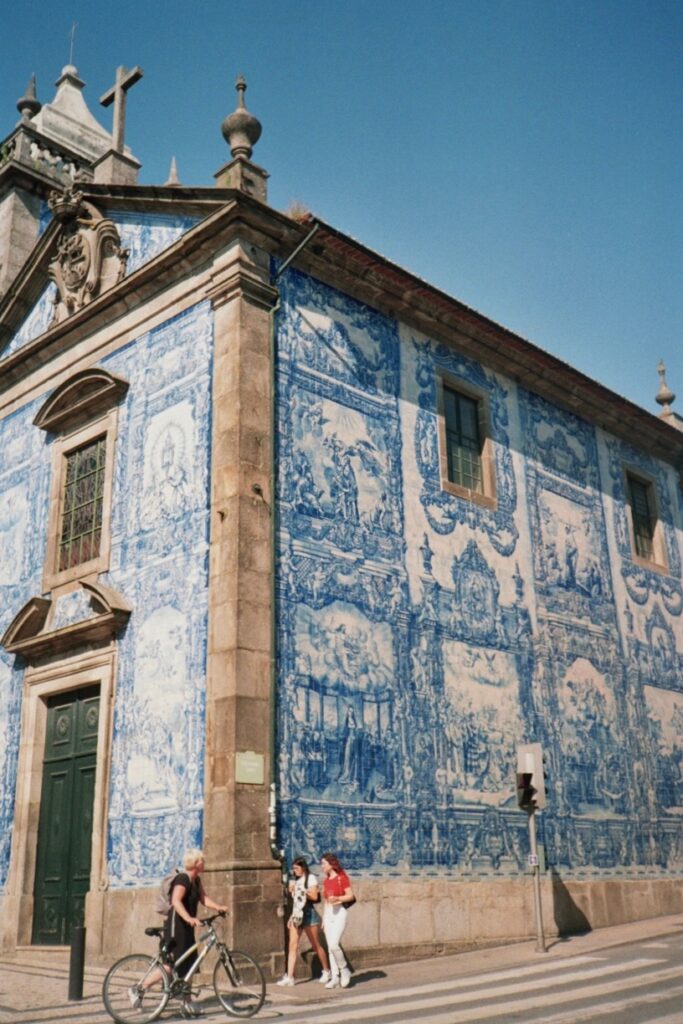
The scene has only grown denser since. Porto now has several studios built around fine line, minimalist and micro-realism work, many of them private: appointment only, a handful of clients a day. It’s a different model from the high-volume shop. Less walk-in, more consultation, more of every design drawn from scratch for the person in the chair. At my studio in Boavista I take one client at a time, and over the years I’ve realised that’s half of what people are actually looking for.
The city has a stage of its own, too. The Oporto Tattoo Expo can bring together more than 400 artists and 6,000 visitors, with international guests and a reputation that keeps rising on the quality of the work (Porto as a destination). All of it makes Porto, today, the centre of fine line tattoo in Portugal, and one of the points on the European map for anyone after the style. If you want the practical side of where to go, I have a guide on where to get a fine line tattoo in Porto.
Why clients fly in from all over to get tattooed in Portugal
Clients from a long list of countries travel to Porto for a fine line tattoo in Portugal, and there are real reasons behind it. I’ve tattooed people from the United States, France, Belgium, Australia and Switzerland. Some built part of a trip to Porto around the appointment. One American client told me she’d “crossed an ocean” to do it, and it stopped surprising me a long time ago.
The reasons overlap, and not all of them are about the tattoo itself:
- Tattoo tourism. Porto has become a strong travel destination, and more and more visitors want to mark the trip with a keepsake on the skin rather than a fridge magnet (tattoo tourism in Porto). I wrote about this in getting a tattoo in Porto as a travel memory.
- The azulejo. It’s the perfect cultural souvenir. A Portuguese tile pattern in fine line is delicate, one of a kind, and tied straight to the place it was made. These are some of my favourite pieces to do for people visiting from abroad. I go into it in the azulejo tattoo in Porto.
- Price. Next to London, Paris or Berlin, getting tattooed in Porto tends to cost less, and that doesn’t mean any drop in quality.
- The private experience. Nobody flies in for a tattoo to be rushed. The private-studio model, with time and conversation built in, fits the idea of a travel tattoo that’s thought through and unhurried.
What brings these people in is the whole package: the city, the style, and the way they’re looked after.
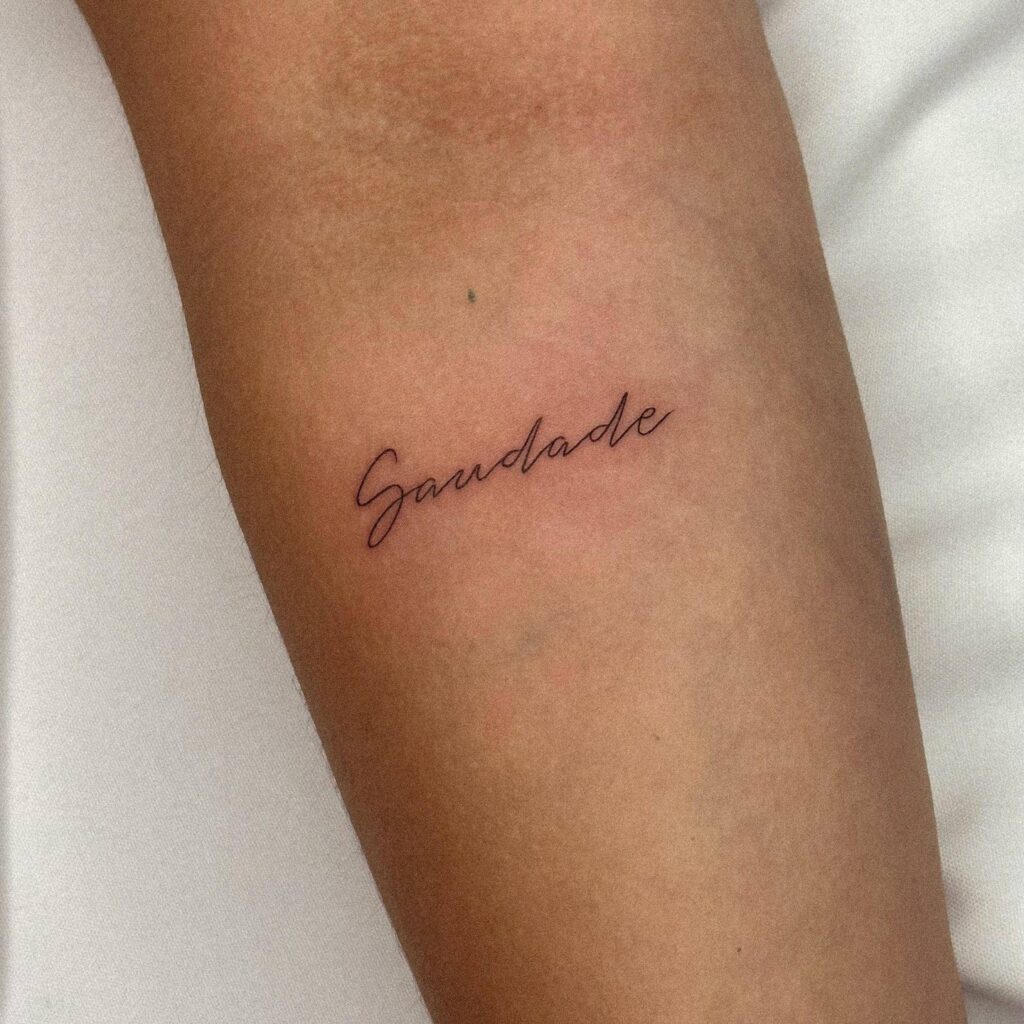
What defines the Portuguese fine line scene
Calling it a “Portuguese school” would be a stretch, and I’m not one for stretches. Still, there are traits that make fine line done in Porto recognisable. Three of them, mostly.
First, the Brazilian-Portuguese crossover. A large share of Porto’s fine line artists, me included, came from Brazil. We brought a well-worked tradition of thin-line, floral and ornamental tattooing, and we found a European city and a European clientele waiting for it. Out of that meeting comes a voice of its own: Brazilian technique, local sensibility.
Second, the Portuguese motif. The azulejo, the architecture, the ornament on church façades, all of it finds its way into the designs. Not as a tourist cliché, but as a genuine visual vocabulary: geometric, symmetrical lines that sit beautifully in fine line on the skin.
Third, the delicate taken seriously. The scene here has narrowed in on the small and the fine: florals, ornamental work, minimalism, micro-realism. It’s a tight, deliberate focus. In my own case, it’s the azulejos, the ornamental pieces and the florals that define me: delicate tattoos, drawn from scratch for each client, with aftercare and a touch-up when it’s needed.
Add to that the empathy of someone who knows a lot of people arrive nervous, often for a first tattoo. In my experience, what keeps clients coming back goes past the linework: it’s feeling heard and feeling safe. That mix, more than any label, is what’s putting Porto on the map.
Closing
Fine line wasn’t born in Portugal, but it found an unlikely, happy home here. Porto brought together a generation of fine line artists, a curious kind of tourism, the azulejo and an intimate studio model, and in a few short years it became one of Europe’s destinations for delicate tattooing. It’s a small scene, a demanding one, with a character of its own. And it’s still growing.
If you’re thinking about your own fine line tattoo in Porto, whether it’s your first or one more in a collection, I like to make it slowly and to fit you. You can see my work and reach me on Instagram @gibianco.tattoo or by email (gihbiancotattoo@gmail.com). Tell me the idea. We’ll draw the rest together.
Frequently asked questions
What is a fine line tattoo?
It’s a style done with a single needle and very thin lines (around 0.25–0.30 mm), which produces delicate, detailed pieces (florals, ornamental work, minimalist designs), usually with no heavy shading.